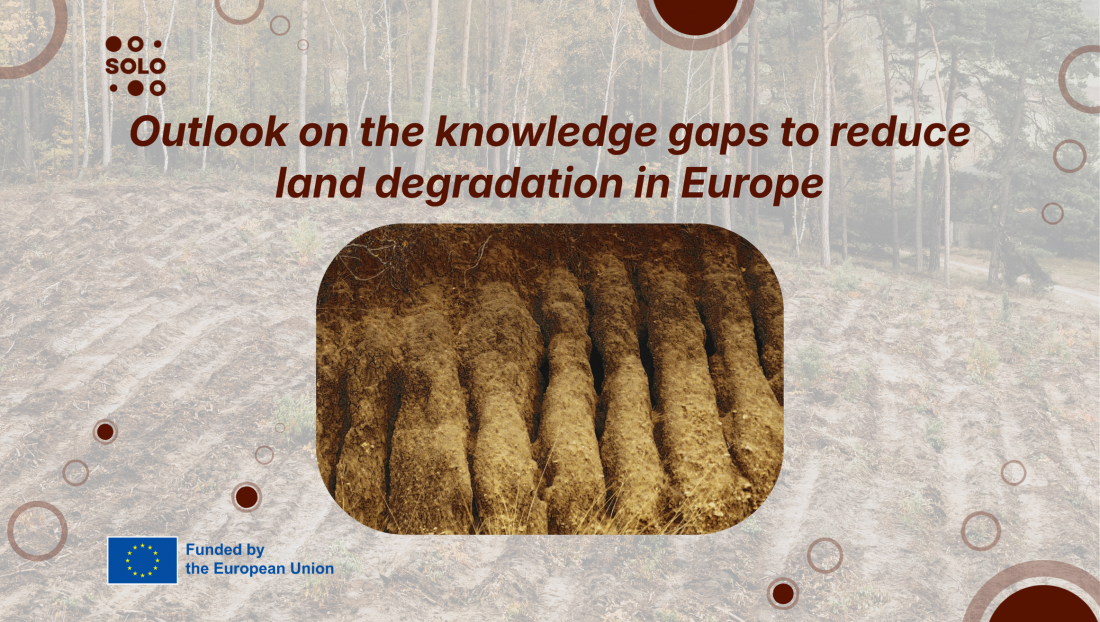
The SOLO Reduce Desertification Think Tank has published its exploration of the current research gaps concerning land degradation across Europe.
Land degradation is a global threat that severely reduces the productivity of fields, pastures, and forests. While this issue can involve broader environmental elements like water and climate, it is most frequently driven by the decline of soil health through erosion, pollution, and the long-term loss of plants. This problem already affects a large number of people worldwide, and experts warn that an area the size of South America could become degraded by 2050 if immediate action is not taken.
The situation is particularly urgent within the European Union, where over 80% of agricultural soils contain pesticide residues, and close to 3 million sites are potentially contaminated. What is more, large areas of European land are damaged because of soil erosion by water, compaction, and soil sealing. At the same time, millions of tonnes of healthy soil dug up from building sites are disposed of as waste because there are no proper rules to help reuse it. To counter these threats, the EU Mission Soil has established targets to mitigate land degradation, support land managers, and encourage soil restoration practices.
To support these efforts, the SOLO project has established a dedicated Land Degradation Think Tank bringing together a wide network of experts. This team has analysed current research to pinpoint the main missing links and bottlenecks in land conservation. By identifying these knowledge gaps, the new publication provides a clear strategy to guide future funding, improve sustainable land management, and develop better tools to protect soil health for future generations.
If you are interested in checking out the full report, please visit https://journal.soils4europe.eu/article/148999/.